Introduction: Understanding Glioblastoma and Metabolic Vulnerability
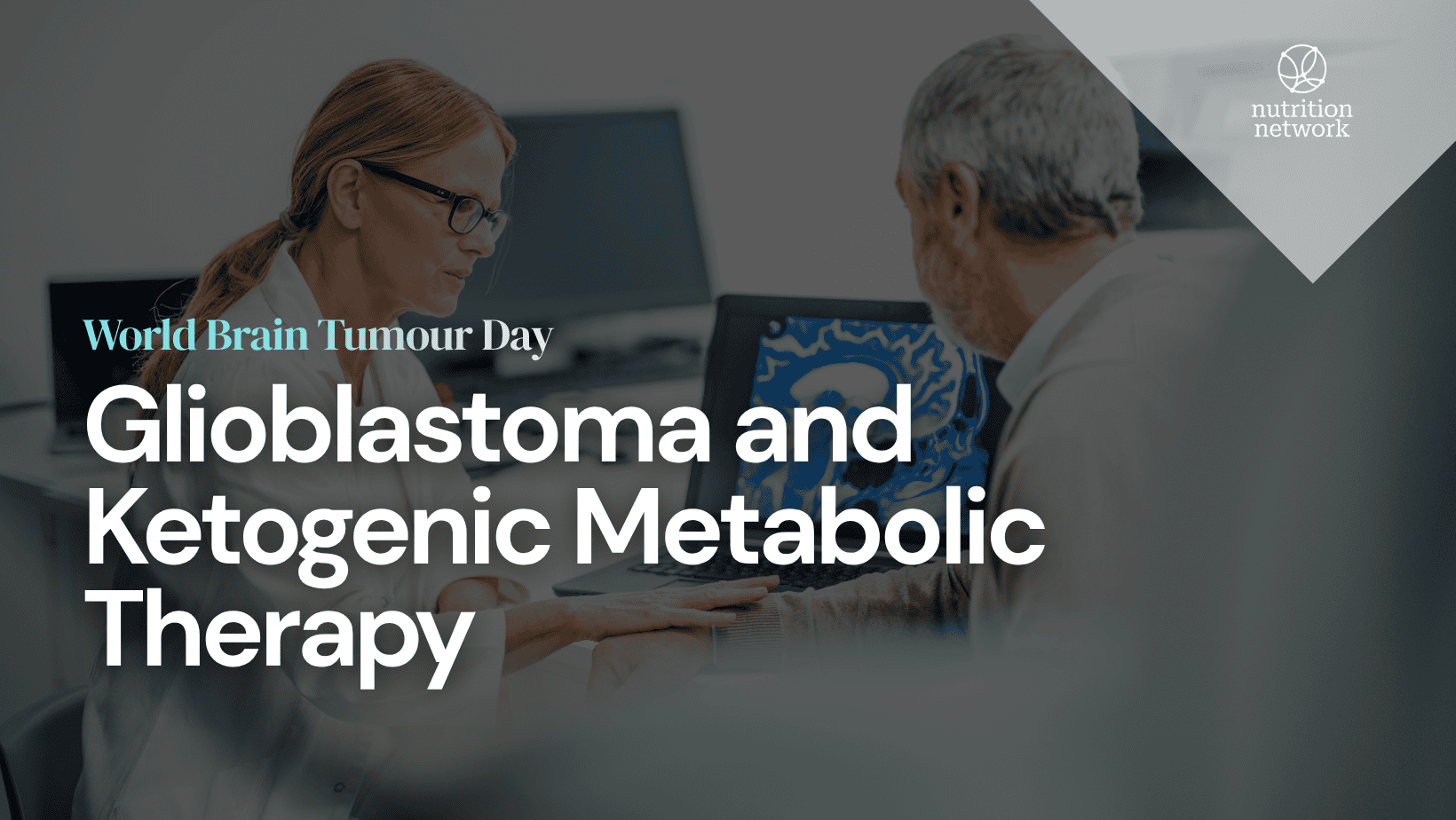
On World Brain Tumour Day, we examine the latest reviews on the use of ketogenic metabolic therapy (KMT) for glioblastomas (GBM), the most common malignant primary brain tumour in adults.
This aggressive tumour carries a poor prognosis, with a median survival sitting at around 14 months (1, 2). Despite its aggressive nature, glioblastoma demonstrates a distinct metabolic vulnerability, where it depends heavily on aerobic glycolysis for energy.
The ketogenic diet leverages this vulnerability by:
- Inducing nutritional ketosis.
- Decreasing glycolysis.
- Reducing glucose availability for tumour cells.
- Allowing healthy cells to readily utilise ketone bodies for energy (1, 2).
Ketogenic Metabolic Therapy (KMT) as an Adjunctive Treatment
Ketogenic metabolic therapy (KMT) has emerged as a promising adjunctive therapy for GBM by targeting glycolysis, reducing insulin and growth signalling, and promoting apoptosis (1, 2). While KMT is primarily described by dietary changes, it also includes physical activity and other lifestyle modifications (1).
Key Insight: These interventions make the tumour vulnerable, but by themselves, they are not expected to control tumour growth. Instead, they work synergistically with other treatments, including pharmacotherapy, chemotherapy, radiosurgery, and radiotherapy (1-3).
Dietary Targets and the Glucose-Ketone Index (GKI)
Typically, the ketogenic diet utilised reduces carbohydrates to less than 20 g/day and is adjusted to give reduced blood glucose levels and elevate ketones for a therapeutic effect (1).
An optimal target occurs where glucose levels are equal to or lower than ketone levels (1). The table below outlines the specific therapeutic zones utilized in recent research:
| Biomarker | Target Therapeutic Range |
| Carbohydrate Intake | <20 g/day (1) |
| Ketone Values | >3.5 mM/L (3, 1) |
| Glucose Values | <80 mg/dL (4.4 mmol/L) or 4 mmol/L (3, 1) |
| Glucose-Ketone Index (GKI) | GKI ≤ 2 (1) |
Recent Studies on KMT for Brain Tumours
Recent clinical research continues to support the feasibility of KMT in oncology:
- Framework for Research: Duraj et al. (2025) present one of the most comprehensive discussions, including implementation strategies, and present a framework for dietary and pharmacological KMT research in GBM (1).
- Safety and Efficacy: A recent systematic review and meta-analysis concludes that ‘current evidence supports the KD as a safe, feasible, and biologically rational adjunct to standard glioblastoma treatment.’ Their findings also demonstrate the potential to improve survival without toxicity and encourage phase III trials to establish clinical guidelines (2).
- Pediatric Applications: Other small studies continue to show promise and are being investigated for paediatric cases with similar encouraging early results (3-5).
Duraj et al. (2025) present one of the most comprehensive discussions, including implementation strategies, and present a framework for dietary and pharmacological KMT research in GBM (1). A recent systematic review and meta-analysis concludes that ‘current evidence supports the KD as a safe, feasible, and biologically rational adjunct to standard glioblastoma treatment.’ Their findings also demonstrate the potential to improve survival without toxicity and encourage phase III trials to establish clinical guidelines. Other small studies continue to show promise and are being investigated for paediatric cases with similar encouraging early results (3-5).
Conclusion
More studies are urgently needed to determine the best application of KMT across various cancer types and how best to individualise and optimise therapeutic outcomes.
Professional Resources
The Nutrition Network offers training, Cancer: a metabolic disease, developed in partnership with the Metabolic Terrain Institution of Health (MTHI). This provides participants with:
- An understanding of the mechanisms underlying cancer as a modern and metabolic disease.
- Insights on how to implement TCR (Therapeutic Carbohydrate Restriction) and fasting for cancer treatment.
- The practical tools to understand, manage, and treat their cancer patients holistically.
References
- Duraj, T. et al. (2024) ‘Clinical research framework proposal for ketogenic metabolic therapy in glioblastoma’, BMC medicine, 22(1), p. 578. Available at: https://doi.org/10.1186/s12916-024-03775-4.
- Firdous, J. et al. (2026) ‘Efficacy and safety of ketogenic diet in glioblastoma: an updated systematic review and meta-analysis’, Neurological Sciences, 47(5), p. 461. Available at: https://doi.org/10.1007/s10072-026-09035-y.
- Kiryttopoulos, A. et al. (2025) ‘Successful application of dietary ketogenic metabolic therapy in patients with glioblastoma: a clinical study’, Frontiers in Nutrition, 11, p. 1489812. Available at: https://doi.org/10.3389/fnut.2024.1489812.
- Amaral, L.J. et al. (2025) ‘A phase 1 safety and feasibility trial of a ketogenic diet plus standard of care for patients with recently diagnosed glioblastoma’, Scientific Reports, 15, p. 21064. Available at: https://doi.org/10.1038/s41598-025-06675-6.
- AlMutairi, H. et al. (2025a) ‘Safety, Feasibility, and Effectiveness of Ketogenic Diet in Pediatric Patients With Brain Tumors: A Systematic Review’, Journal of Nutrition and Metabolism, 2025, p. 7935879. Available at: https://doi.org/10.1155/jnme/7935879.