
The Big Question: Can a Low-Carb diet protect your heart?
For decades, people attempting to lose weight or improve their blood sugar through a low-carbohydrate or ketogenic diet have faced the same persistent concern: ‘Won’t all that fat raise your cholesterol and hurt your heart?’ When someone starts eating real, whole foods, limiting carbohydrates to 30 grams per day while enjoying natural fats, they often feel dramatically better, drop weight, and stabilize their energy. Yet traditional medical conversations frequently focus narrowly on a single blood metric: Low-Density Lipoprotein Cholesterol (LDL-C).
For decades, people attempting to lose weight or improve their blood sugar through a low-carbohydrate or ketogenic diet have faced the same persistent concern: ‘Won’t all that fat raise your cholesterol and hurt your heart?’ When someone starts eating real, whole foods, limiting carbohydrates to 30 grams per day while enjoying natural fats, they often feel dramatically better, drop weight, and stabilize their energy. Yet traditional medical conversations frequently focus narrowly on a single blood metric: Low-Density Lipoprotein Cholesterol (LDL-C).
A recent study in the American Journal of Preventive Cardiology (published on September 30, 2026) by Dr. Matthew Calkins, Dr. Adrian Soto-Mota, and colleagues directly answers this question.
Instead of fixating on isolated cholesterol numbers, the researchers in this study evaluated what happens to a person’s overall heart attack, stroke, and heart failure risk when every aspect of their metabolic health is measured together over a full year, with continuous telehealth care as the intervention.
Real People, Real Progress: What Happened After 12 Months?
The study followed 120 adults living with overweight or obesity (average BMI of 39.2 kg/m²) enrolled in the TOWARD telehealth continuous-care programme. Participants received virtual doctor visits, health coaching, remote patient monitoring via connected smart scales and blood pressure cuffs, and guidance on a whole-food ketogenic lifestyle limiting carbohydrates to ≤30g/day without restricting saturated fats.
After 12 months of continuous care, the health improvements were quite positive:
- Significant and sustainable weight loss: 89 out of 90 programme completors lost weight, achieving a median weight loss of 12.2% of their total body weight (reducing BMI by an average of 5.6 kg/m²).
- Major blood pressure reductions: Systolic blood pressure dropped by an average of 10.7 mm Hg across participants.
- Blood sugar and diabetes improvement: Average HbA1c dropped by 0.48%. Notably, 13 participants achieved complete diabetes remission, cutting the number of diabetic participants by more than half (from 23 down to 10).
- Triglycerides and good cholesterol shifts: Triglycerides fell by 34 mg/dL while High-Density Lipoprotein (HDL ‘good’ cholesterol) increased by 5.1 mg/dL.
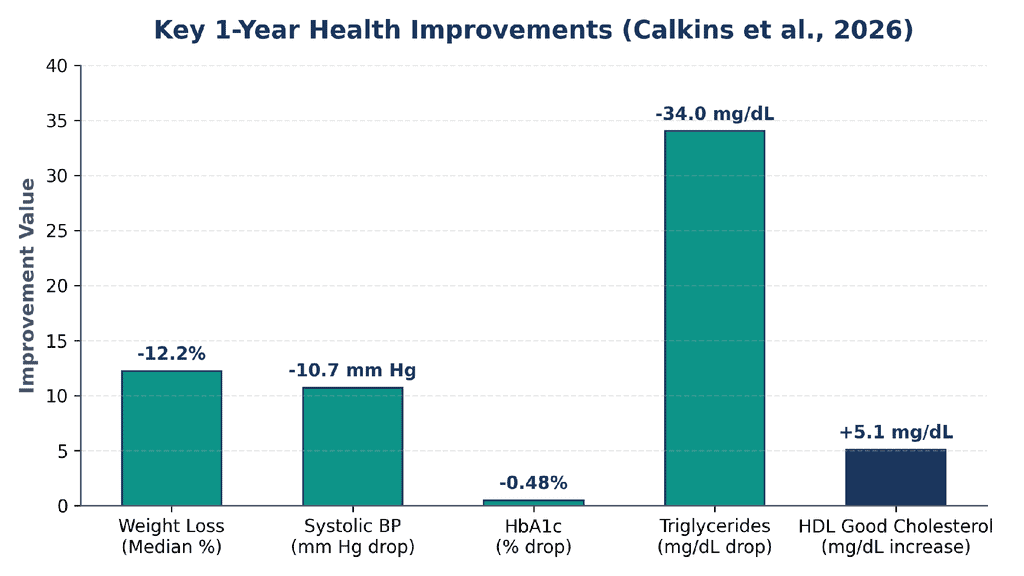
Figure 1: Comprehensive 1-year clinical improvements among study participants on a telehealth ketogenic care program (Calkins et al., 2026).
Why didn’t LDL spike?
One of the most clinically important findings in Calkins et al. (2026) addresses LDL cholesterol directly. Despite eating a high-fat diet with no prescribed saturated fat limits, LDL cholesterol reportedly remained unchanged on average (average change of -2.4 mg/dL, with a median individual change of exactly 0 mg/dL). In addition to this, total cholesterol was also unchanged (-3.5 mg/dL).
This confirms previous clinical research showing that while lean, athletic individuals may experience LDL increases on low-carb diets, adults with overweight or obesity typically experience neutral LDL changes alongside dramatic drops in triglycerides and blood pressure. The net result is a much healthier metabolic profile.
Measuring total cardiovascular risk
To evaluate overall cardiovascular risk, the study utilized the American Heart Association’s newly validated PREVENT (Predicting Risk of cardiovascular disease EVENTs) equations. Unlike older tools that looked primarily at cholesterol and age, PREVENT integrates blood pressure, blood sugar (HbA1c), kidney function (eGFR), lipids, social deprivation index, and medication status to estimate 10-year and 30-year risk for total cardiovascular disease, artery disease (ASCVD), and heart failure.
When all metabolic improvements were factored into the PREVENT tool, the participants experienced significant reductions in predicted 10-year risk:
| Cardiovascular Risk Category | 10-Year Relative Risk Drop | Clinical & Patient Impact |
| Total Cardiovascular Disease (CVD) | 28% Reduction (GMR 0.72) | Substantial overall drop in 10-year heart event probability. |
| Atherosclerotic CVD (ASCVD) | 29% Reduction (GMR 0.71) | Significant protection against heart attacks and stroke. |
| Heart Failure Risk | 42% Reduction (GMR 0.58) | Major reduction in heart muscle overload and fluid retention risk. |
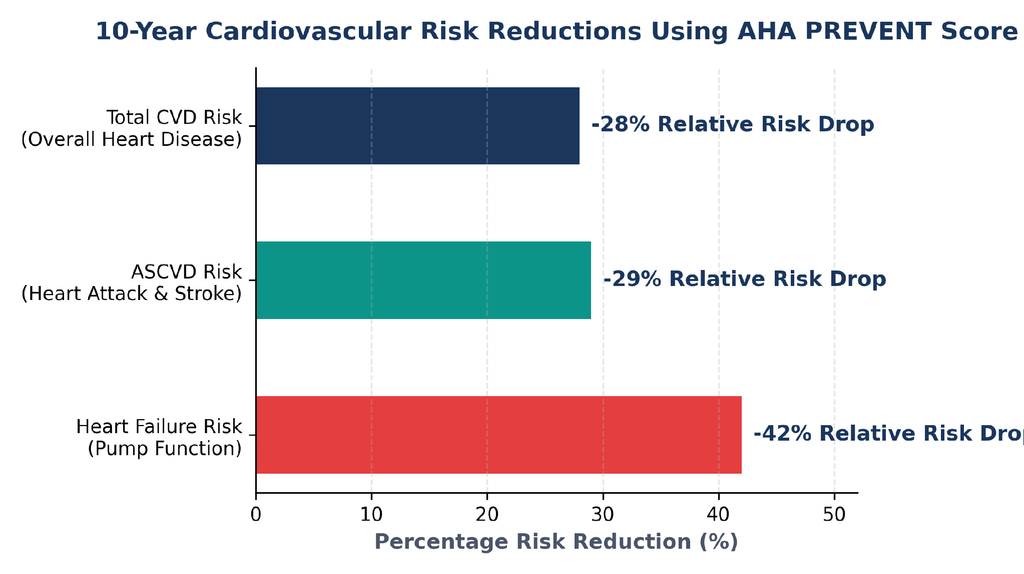
Figure 2: Relative reductions in 10-year cardiovascular, arterial, and heart failure risk modeled by AHA PREVENT equations.
Even when researchers performed a strict sensitivity analysis, holding medication status and diabetes inputs unchanged at baseline to strip out the benefit of deprescribing, 10-year total CVD risk remained 21% lower. This proves that actual underlying physical improvements in blood pressure, blood sugar, and triglycerides drove most of the heart protection.
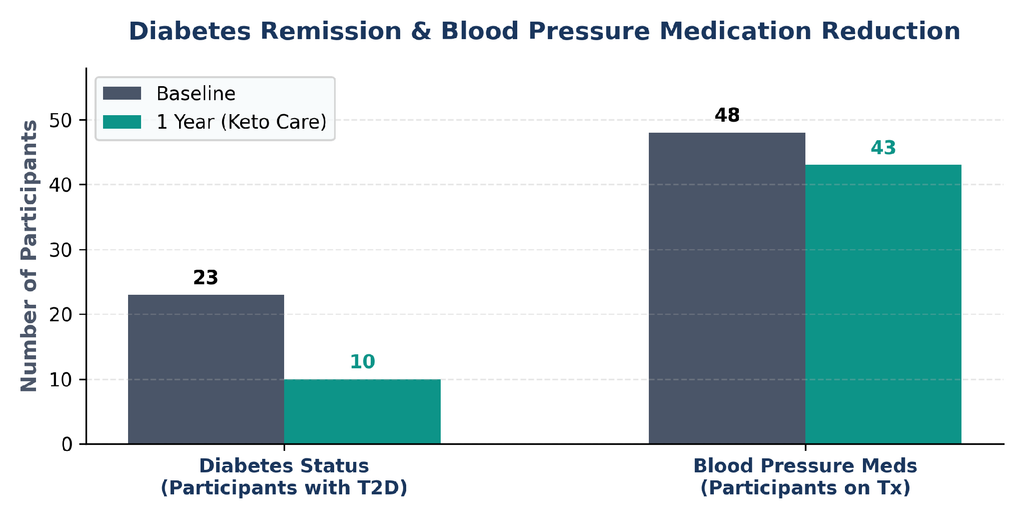
Figure 3: Reductions in active diabetes diagnoses and blood pressure medication reliance after 1 year.
Key Takeaways for patients and practitioners
The Calkins et al. (2026) paper offers crucial, empowering lessons for both everyday individuals and healthcare providers:
- Look at the whole picture: Cardiovascular health is dictated by blood pressure, blood sugar, inflammation, and insulin sensitivity, not just LDL cholesterol in isolation.
- Deprescribing is possible: Therapeutic carbohydrate restriction allowed 9 patients to reduce or eliminate blood pressure medications and enabled 13 patients to achieve diabetes remission.
- Continuous care matters: Combining personalized whole-food nutrition with remote monitoring, coaching, and clinical supervision creates sustainable, long-term health transformations.
Reference
Calkins, M., Buchanan, L., Curtis, K., Kalayjian, T., Richardson, C., Saner, E. M., & Soto-Mota, A. (2026). One-year change in PREVENT-estimated cardiovascular risk during telehealth metabolic care centered on a therapeutic ketogenic diet. American Journal of Preventive Cardiology, 102087. https://doi.org/10.1016/j.ajpc.2026.102087
Article By: Warren Lucas
https://nutrition-network.org/online-training/cardiovascular-health/