Every November, global health organizations, practitioners, and advocates unite for Diabetes Awareness Month—a campaign designed to shed light on one of the fastest-growing public health crises of our era.
For decades, the standard narrative around Type 2 Diabetes (T2D) has centered on managing symptoms: managing blood glucose levels, managing medication schedules, and managing systemic complications. But as global statistics continue to climb, a critical question emerges: Is management enough, or is it time to champion true reversal?
The Global Reality: What the Numbers Tell Us
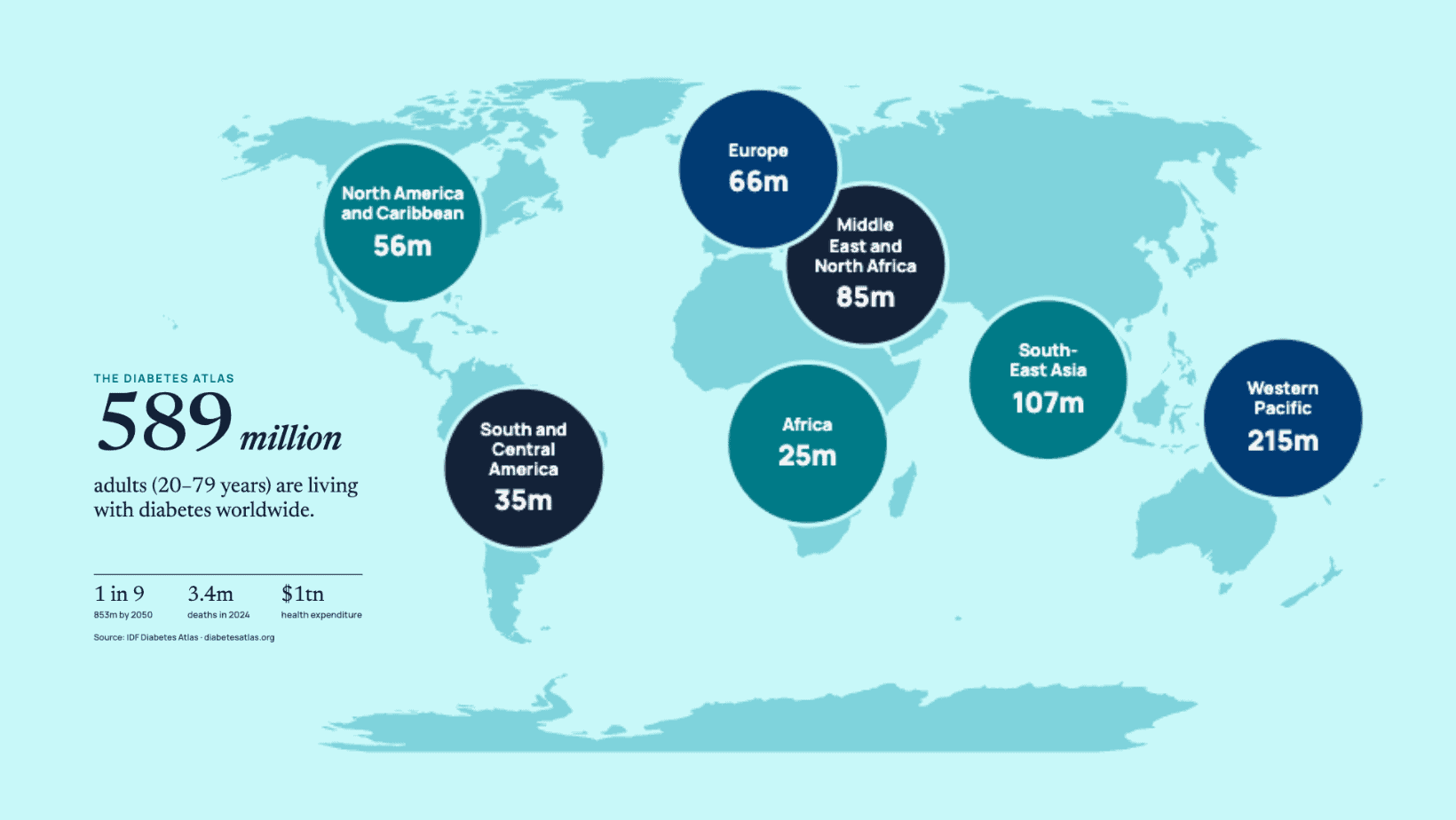
Data from leading world health institutions demonstrates that the diabetes epidemic is accelerating rapidly, placing unprecedented pressure on individuals and healthcare systems globally.
Over 830 Million Affected Worldwide
According to recent pooled analyses by the World Health Organization (WHO), the number of adults living with diabetes surged to 830 million globally—more than quadrupling since 1990.
The Undiagnosed Epidemic
Data from the International Diabetes Federation (IDF) reveals that over 250 million people are living with undiagnosed diabetes. Because early symptoms can be subtle, millions suffer underlying physiological damage long before receiving a formal diagnosis.
Disproportionate Impact
Over 80% of adults with diabetes live in low- and middle-income countries, where access to specialized care and metabolic education remains severely constrained.
Severe Downstream Complications
Uncontrolled high blood glucose remains a primary cause of cardiovascular disease, kidney failure, adult-onset blindness, and lower-limb amputations.
Rethinking Type 2 Diabetes: From Chronic Progression to Metabolic Health
Historically, Type 2 Diabetes was framed as an inevitably progressive, lifelong disease. However, modern metabolic science and evidence-based clinical practice have transformed our understanding of the condition:
- Root Cause Focus: Type 2 Diabetes is primarily driven by chronic hyperinsulinemia and insulin resistance, often exacerbated by high-carbohydrate dietary patterns and metabolic dysfunction.
- Early Intervention Matters: Catching impaired glucose tolerance early provides a window of opportunity where targeted therapeutic carbohydrate restriction can reverse disease progression.
- Achieving Remission: Clinical trials and real-world outcomes demonstrate that lifestyle-based therapeutic strategies can safely lower HbA1c below diagnostic thresholds without reliance on escalating pharmaceutical intervention.
Leading the Charge: Up-Skill with the Diabetes Reversal Course
To effectively turn the tide on these statistics, healthcare professionals—including physicians, dietitians, nurses, and health coaches—need practical, evidence-based toolkits designed around metabolic restoration.
The Nutrition Network Diabetes Reversal Course provides a comprehensive, CPD/CME-accredited educational framework designed for clinicians and allied health professionals.
What You Will Learn:
- The Science of Remission: Deconstruct the physiological mechanisms of insulin resistance, hyperinsulinemia, and carbohydrate intolerance.
- Clinical Protocol Application: Implement safe, step-by-step therapeutic carbohydrate restriction for patients with T2D and prediabetes.
- Medication Deprescribing: Master safe practices for adjusting and tapering diabetes medications as glycemic control improves.
- Case Studies & Patient Engagement: Learn strategies for long-term patient compliance and sustainable health behavior change.
Whether you are a medical practitioner looking to transform patient outcomes or an advocate seeking to deepen your clinical knowledge, this course bridges the gap between research and practice.
References
- World Health Organization (WHO). Diabetes Fact Sheet. World Health Organization.
- International Diabetes Federation (IDF). IDF Diabetes Atlas & Global Statistics. International Diabetes Federation.
- NCD Risk Factor Collaboration (NCD-RisC). Worldwide trends in diabetes prevalence and treatment from 1990 to 2022. The Lancet, 2024.